From the shifting margins of contemporary sound, Maple Death Records unveils a new triad of tapes, three distinct signals drifting across borders, languages, and states of perception. An echo that started earlier this year with SabaSaba‘s Detriti.
Across this new cycle, Fera’s Divora Ecomoves like a restless organism where fractured dub memories and raw electronics spiral into a visceral, devouring loop, while Omar Cheikh’s The Garden blooms in suspended time, shaping a quiet yet disorienting landscape of delicate textures and hidden tensions, and luciano chessa & squncr’s Ç emerges as a an orchestral sound art piece, that meshes traditional instruments and modern electronics.
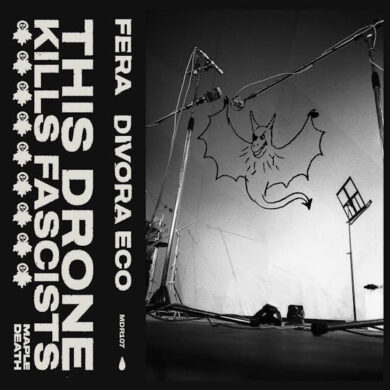
Nothing that Fera commits to tape can really be considered a stopgap affair, nothing is temporary, everything is bustling, committing is breathing.“Divora Eco” is Fera’s latest pursuit into the inbetween hours after night and before dawn, the simple sounds left ringing in the ear after days of feasts and noise, a quiet roar against division and an immersive view into intimacy and resistance through sound. Tossing away as much embellishment as possible, melodies unfurl into drones, drones rot into signal, and signal decays into hum. The basic equipment of an obsolete monophonic synthesizer and echo unit is pushed to its limits to bring forth something tangible and forlonging, a celestial wasteland, made into flesh, shapeshifting towards a flourishing rebellion of intertwined audio bodies.
Fera is Andrea De Franco, electronic composer from Southern Italy now residing in Bologna, also known for his work as visual artist/designer and member of the Undicesimacasa collective. His musical cosmos is profound and imaginative, intergalactic atmospheres that condense fragmented IDM, scintillating textures, distorted synthscapes, crunchy technoid rhythms and swirling abstractions that weave gently, sometimes moody and stark, more often celestial and awe-inspiring. His releases ‘Stupidamutaforma’, ‘Psiche Liberata’ and ‘Corpo Senza Carne’ have brought forth his unique approach to electronic synthesis, a mesh of wandering restlessness, purist minimalism and intense body rituals.
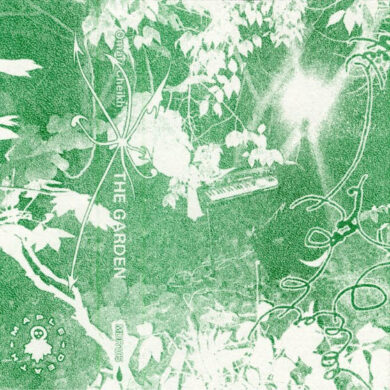
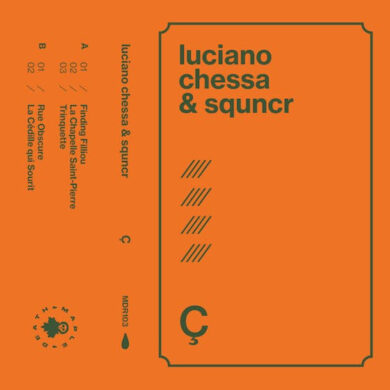
Entering Omar Cheikh’s world feels like crossing a holy portal, the micro‑rhythms of a slow‑growth forest and the lush density of countless light prisms quietly echoing distant songs.‘The Garden’, his first release for Maple Death, weaves a near-ritualistic, emotionally saturated atmosphere, shaped by organic folk elements, somber instrumentation, and lingering industrial textures. Every detail is finely etched yet the song architectures maintain a liquid form, projecting geometrical figures that shapeshift constantly, undulated arpeggios that catch sudden heat manifesting incantations and foregone rituals.Granular patterns reveal haunting melodies and a bizarre mesh of freak-folk, pastoral electronica and late 70s fourth world wave.Ç (pronounced “cédilla”) is the name of a duo consisting of Italian-American audiovisual and performance artist Luciano Chessa and French multi-instrumentalist and sound explorer squncr (François Larini). It is also the title of their first, self-titled album, a scintillating collection of sound art, oddball orchestral movements and beautiful ouevres électroniques. Each track unfolds with eerie precision, opening wide meditative sceneries.Ç was recorded in Monaco during Chessa’s one-year artist residency there: For Chessa and Larini this was a period of intense sonic experimentation, spanning sound art, deep listening, and improvisation that led to this sprawling and cohesive release. Chessa mainly plays the Đàn Bầu, a traditional Vietnamese monochord stringed instrument, while Larini plays electronics, zither, piano and Hohner organetta.Basking in the sunshine of Villefranche-sur-Mer, the Riviera town between Monaco and Nice, and inspired by the heritage of Robert Filliou and Georges Brecht’s mid-60s art and performance space La Cédille qui Sourit (“the smiling cedilla”) as well as the raucous unpretentiousness of the Trinquette Jazz club, Ç produced a tape of shadows and light—at once as dark and atmospheric as the Rue Obscure and as luminous and free as the Eyes in Cocteau’s Chapelle Saint-Pierre.


Komentarai