[ SCROLL DOWN FOR ENGLISH ]
Prieš 20 metų tuomet mažai žinomos švedų grupės Peter Bjorn and John singlas „Young Folks“ šovė į pasaulio topų viršūnes. Geriausio 2006-ųjų gabalo rinkimuose “jaunimas” į priekį praleido tik Hot Chip “Over and Over”, o nerūpestingas hito švilpavimas skamba iki šiol. Tu tikrai jį girdėjai, jei net nežinai grupės pavadinimo.
1999-aisiais Stokholme susikūrusios grupės muzikantai itin mėgo The Stone Roses ir Ride, taip pat – augant per radiją girdėtus Depeche Mode, Fleetwood Mac ar OMD. Trio nariai neslėpė simpatijų klasikiniam ’60s baroque pop, power pop ir new wave.
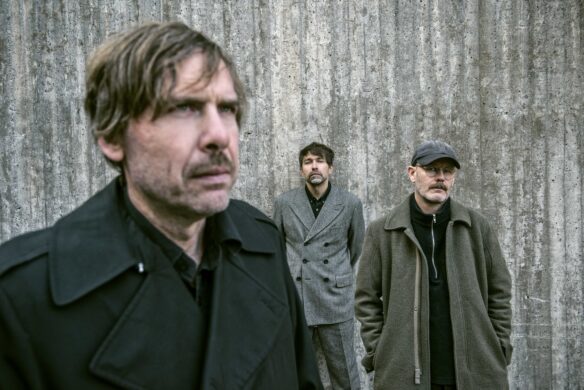
Prieš grupės pasirodymą festivalyje “KiKuMu” Estijoje šią vasarą, trio vokalistas ir gitaristas Peter Morén pasakoja apie netikėtą proveržį ir švedų talentą kurti hitus.
P. Morén yra vienas Stokholmo menininkų kolektyvo INGRID įkūrėjų. Jis gimė ir augo Moroje, savo muzikinę karjerą pradėjo grodamas smuiku, bet netrukus perėjo prie gitaros. Be Peter Bjorn and John, išleido keturis solinius albumus: anglų kalba „The Last Tycoon“ (2008), švedų kalba „I Spåren Av Tåren“ (2010), taip pat „Pyramiden“ (2012) ir “40” (2017). 2019 m. P. Morén kartu su švedų pop dainų autoriumi Davidu Shutricku išleido bendrą EP „En Åldrande Befolkning“. Vėliau tais pačiais metais duetas įrašė dar tris dainas ir išleido „En Åldrande Befolkning“ kaip pilnametražį albumą.
„Kikumu“ festivalyje Estijoje minėsite sėkmingiausio jūsų albumo „Writer’s Block“ metines. Kaip jaučiatės šiandien grodami dainas, išgarsinusias jus prieš 20 metų?
Viskas prasidėjo pernai, kai buvome pakviesti į festivalį Kalifornijoje, būtent tada pradėjo formuotis ši idėja. Labai malonu atlikti visą albumą, nors daugelį metų grojome kai kurias dainas, tik tokiu būdu jos yra savo kontekste. Turėjome iš naujo išmokti keletą kūrinių. Proceso metu supratau, kad jie man vis dar labai patinka. Taip pat buvo puiku koncertuose matyti žmones, kuriems dvidešimt ar net mažiau. Tada jie mūsų negirdėjo ir atrado šią muziką gerokai vėliau.
Ką ryškiausiai prisimenate iš to albumo įrašinėjimo laikų?
Tai buvo 2005-ųjų vasara. Stokholme buvo neįtikėtinai karšta. Vaikščiojome su šlepetėmis, valgėme ledus, maudėmės. Tada nuėjome į studiją. Na, tai nebuvo tikra studija – tiesiog įrašų erdvė netoli namų su labai paprasta įranga, instrumentais ir mikrofonais. Buvome išleidę du albumus, tačiau jie labai toli nenukeliavo. Nusprendėme, įrašysime dar vieną ir pasitrauksime – tai bus mūsų paskutinis albumas. Todėl jautėmės labai atsipalaidavę. Pagalvojome, eksperimentuokime, išbandykime naujas idėjas, nes tai vis tiek nesvarbu. Tai ir padarė albumą ypatingu. O tada paaiškėjo, kad vietoj pabaigos tai buvo tik pradžia.
Jūs tikrai ruošėtės pasitraukti?
Taip. Ne visai iš muzikos, bet iš šios grupės – tikrai.
Galiu tik įsivaizduoti, koks šokas turėjo būti šio albumo sėkmė tiek Švedijoje, tiek tarptautiniu mastu.
O taip. Absoliučiai nieko nesitikėjome. Tai buvo didžiulė staigmena. Labai džiugi staigmena!
Dabar žvelgiant atgal, kas lėmė to albumo sėkmę?
Manau, viena priežasčių buvo aranžuotės. Prieš tai buvome parašę gerų dainų, bet tai, kaip jas atlikome gyvai, repetavome ir įrašinėjome, iš esmės buvo tas pats, kaip tai daro klasikinės roko grupės. Šiame albume dainas kūrėme studijoje, aptarėme aranžuotes, eksperimentavome su naujomis idėjomis. Pavyzdžiui, nusprendėme kitaip naudoti būgnus, labiau kaip semplus. Norėjome dainose palikti daugiau erdvės, suteikti joms paprastumo. Tai viena iš priežasčių, kodėl tiek daug hiphopo atlikėjų vėliau jas semplavo – lengva, kai toks aiškus ritmas. Tuo metu tokia muzika skambėjo kitaip nei visa kita radijuje. Vėliau, žinoma, daugelis grupių pradėjo skambėti panašiai. Tai buvo nauja, bet pigiai sukurta, paprastai įrašyta.
Skamba taip, lyg jums pavyko dainas rašyti laisviau, tuo pat metu dirbant profesionaliau nei anksčiau.
Taip, būtent. Pirmuosius du albumus įrašinėjome tikrose studijose, bet šį kartą daug daugiau kalbėjomės, diskutavome, praleidome daugiau laiko kartu.
Kuo labiausiai nustebino žmonių reakcija? Kuo labiausiai didžiuojatės?
Tai buvo tokia ilga kelionė. „Young Folks“ pirmiausia pradėjo groti Švedijos radijuje. Tada mus pasikvietė britų leidykla ir pradėjome gastroliuoti po JK ir Airiją. Po to atėjo Japonija, Australija ir, galiausiai, daug vėliau, Jungtinės Valstijos. Viskas vyko žingsnis po žingsnio, ir vos nusileidę Niujorke, grojome Conano O’Brieno televizijos laidoje. Kalbama, kad norint prasibrauti Amerikoje, reikia gastroliuoti, gastroliuoti, gastroliuoti ir neįtikėtinai sunkiai dirbti, bet mes patekome į televiziją dar prieš savo pirmąjį koncertą. Tai buvo didžiulė staigmena. Albumas dar net nebuvo išleistas JAV, bet žmonės jį jau užsisakinėjo iš užsienio.
Tai taip pat buvo era, kai internetas ir tinklaraščiai viską keitė. „Myspace“ mums labai padėjo. Įkėlėme ten „Young Folks“ dar prieš tai, kai jis buvo išleistas kur nors kitur. Dabar viskas atrodo taip keista. Kažkaip prasmukome pro įtrūkimą, kol industrija vėl neperėmė valdžios. Tai buvo laikai, kai niekas nežinojo, kas nutiks toliau.
Ar būdamas jaunesnis svajojai apie tokį dėmesį ir šlovę? Juk esi kilęs iš mažo miestelio.
Muzika susidomėjau labai jaunas. Björnas ir Johnas (bosistas Björn Yttling ir būgnininkas John Eriksson) buvo tokie patys. Bet tikrai niekada nesitikėjau nieko panašaus. Visada galvojau, kad muzikas buvo mano hobis šalia kitų darbų. Niekada neįsivaizdavau, kad viskas taip pasisuks. Jautėmės tarsi pogrindyje – klausėmės daugybės keistų grupių, indie ir lo-fi muzikos. Galbūt tai ir šiokia tokia problema, nes turime keletą populiarių hitų, tačiau žmonės vis dar iš tikrųjų nežino, kas esame. Tam tikra prasme vis dar esame pogrindyje. Tiesiog visi žino porą mūsų dainų. Kai sutinku žmones, jie dažnai nežino grupės pavadinimo, bet vos tik pradedu švilpauti, iš karto atpažįsta. Gana juokinga, kad turime apie 400 dainų, bet žmonės žino vos keletą iš jų. Vis dėlto nėra ko skųstis – pragyvename iš muzikos. Man visada buvo svarbiausia kurti muziką savo sąlygomis. Tikrai niekada nesitikėjau tokios sėkmės.
Ar turite mėgstamiausią dainą iš savo katalogo?
Oho, tai sunkus klausimas. Turiu ir kitų projektų. Bet kalbant apie Peter Bjorn and John, man labai patinka mūsų naujausias albumas, pasirodęs pandemijos metu. Negalėjome su juo gastroliuoti, todėl jis liko šiek tiek nepastebėtas.
Iš „Writer’s Block“ man labiausiai patinka groti gyvai „Up Against the Wall“. Tai visada virsta improvizacija, todėl smagu groti. Bet, tiesą sakant, dainų yra tiek daug.
Bandau suprasti, kur yra „Young Folks“?
Tai labai gera daina, bet ji niekada nebuvo mano mėgstamiausia.
Daugelis muzikantų pavargsta nuo savo didžiausių hitų. Ar jums taip nutiko?
Ne, nelabai. Aš nuoširdžiai manau, kad tai gera daina, ir atlikdamas ją dabar, vertinu dar labiau nei iškart po albumo išleidimo. Anuomet bandėme sugalvoti ką nors naujo ir man atsibodo, kad visi nuolat kalba apie „Young Folks“. Aš asmeniškai dievinu gitaras, o toje dainoje net nėra gitaros – aš tik dainuoju. Tai taip pat labai „parašyta“ daina, kažkas, ką susėdome ir aptarėme, o ne tai, kas gimsta iš tiesioginių emocijų ar įkvėpimo.
Pavyzdžiui, pirmoji albumo daina „Objects of My Affection“ yra viena mano mėgstamiausių, nes ji labai asmeniška ir mane su ja sieja emocinis ryšys. Tai nereiškia, kad ji – geresnė daina.
Kuo ypatinga Švedijos kultūra ir tradicijos, išugdančios tiek daug puikių popmuzikos atlikėjų?
Manau, yra kelios priežastys. Akivaizdžiausia yra ta, kad turime nemokamas muzikos mokyklas – gali mokytis groti instrumentu šalia kitų pamokų, nesvarbu, ar tai būtų fortepijonas, gitara, ar smuikas, kuriuo grojau vaikystėje.
Kalbant apie popmuziką, padeda ir tai, kad labai gerai kalbame angliškai. Kitaip nei Vokietijoje, Italijoje ar Ispanijoje, 9-ajame dešimtmetyje, kai augau, televizija nebuvo dubliuojama. Skaitėme subtitrus ir klausėmės, kaip žmonės kalba angliškai. Mums taip pat būdingas tam tikras keistumas, kartais priskiriamas japonams. Kalbant apie popmuziką, muzikos istoriją ar grojimo techniką, labai gilinamės į tai ir gana gerai išmanome popkultūrą.
Be to, net ir 5-6-ajame dešimtmečiais į Švediją vyko daug užsienio muzikantų, džiazo atlikėjų, o vėliau – ir grupių iš Britanijos. The Beatles čia grojo anksčiau nei bet kur kitur už JK ribų. Ir tada, žinoma, ABBA. ABBA, Roxette ir Europe suteikė žmonėms pasitikėjimo, kad įmanoma pasiekti taip toli. Ir visa ši muzika turi tam tikrą melancholijos, kylančios iš švedų liaudies tradicijų, susimaišiusių su Vakarų įtaka. Juk turime ilgas žiemas ir Ingmarą Bergmaną.
Kaip per šiuos du dešimtmečius pasikeitė jūsų pačių dainų rašymas?
Didelis pokytis buvo tai, kad Johnas pirmą kartą pradėjo rašyti dainas. Prieš tai buvome tik aš ir Björnas. Tai pakeitė visą dinamiką ir nuo tada kiekviename albume stengiamės daryti kažką kitaip. Kartais tai tampa ir kliūtimi. Kaip sakiau, „Writer’s Block“ suveikė, nes buvome labai atsipalaidavę ir per daug nesirūpinome rezultatu. Vėliau mums labai rūpėjo – norėjome tęsti, išbandyti naujus dalykus. Nuolat ieškojome pusiausvyros, nes mėgstame pop melodijas, bet taip pat mėgstame eksperimentinius, keistus dalykus. Taigi, visada svarstome: ar turėtume kurti superpop, ar superkeistus? Galiausiai bandome rasti kažkokį mišinį. Kartais tai veikia, kartais ne.
Pavyzdžiui, kurdami „Living Thing“, manėme, kad kuriame superpop albumą, bet daugelis žmonių manė, kad tai labai keistas įrašas. Žvelgdamas atgal, suprantu, kodėl. Po to grįžome prie savo šaknų ir įrašėme pankroko power-pop albumą „Gimme Some“, vieną mano mėgstamiausių. Jame daug gitarų! Tada bandėme parašyti komercinį hitų albumą ir pasamdėme krūvą brangių prodiuserių, bet tai nelabai pavyko. „Breakin’ Point“ yra geras albumas, bet jis neskamba kaip Top20 įrašas. Po to, kituose dviejuose albumuose „Darker Days“ ir „Endless Dream“, vėl atsipalaidavome ir tapome labiau savimi. Nustojome bijoti daryti tai, kas mums natūralu. Kurti muziką kartu yra sunkoka, nes mūsų skoniai gana skirtingi. Kartais bandėme sėdėti kartu viename kambaryje ir rašyti, bet tai tiesiog nebuvo natūralu, todėl to atsisakėme. Dabar net nežinau – jau daugelį metų nesukūrėme naujo albumo. Kuriu savo albumus, tai sekasi lengviau.
Ar jautėte spaudimą parašyti dar vieną „Young Folks“, dar vieną tarptautinį hitą?
Manau, kad taip. Būtent su šia problema susidūrėme kurdami „Breakin’ Point“. Bandėme rašyti pop dainas, bet jei paklausyti „Young Folks“, tai neturėtų pasiteisinti. Visi sako, kad sėkminga pop daina turėtų turėti trumpą įžangą ir kuo greičiau pereiti prie priedainio, bet tos dainos įžanga tęsiasi amžinai. Manau, žmonėms ji patiko, nes mes vis dar buvome keista indie grupė, bet su įsimintinomis melodijomis.
Peter Bjorn and John netrukus švęs 30 metų kartu, o jums ką tik sukako 50. Ar vis dar jaučiatės kaip young folks, ar jau esate muzikos industrijos veteranai?
Cha cha! Viena „Young Folks“ ironijų buvo ta, kad mes ją parašėme, kai jau buvome beveik dvidešimties. Žmonės mano, kad tai apie paauglius, bet mes kalbėjome apie savo amžiaus žmones, kurie jautė savotišką nuovargį dėl santykių. Šiandien nesijaučiu nei itin senas, nei itin jaunas. Po visų patirčių grupėje ir apskritai gyvenime vis dar labai trokštu kurti naują muziką. Dainų rašymas netapo lengvesnis, bet man tai teikia daugiau pasitenkinimo nei bet kada anksčiau. Man tai labai, labai patinka. Darau tai nuo 10-ies metų, ir tai tarsi kvėpavimas – kažkas, ką darysiu visą savo gyvenimą. Tiksliai nežinau, kokia forma, ką Peter Bjorn and John darys, jei ką nors darys. Vis dar galime groti senas dainas, bet šiuo metu neplanuojame naujo albumo. Susitelkiu į savo kūrybą – mažiau ginčų, daugiau pasitenkinimo. Žinoma, tai gali pasikeisti. Bet kokiu atveju, man vis dar smalsu kurti naują muziką.
Kaip laikui bėgant keitėsi jūsų trijų dinamika? Manau, kad net jei nebekuriate kartu, vis tiek esate geri draugai.
Manau, kad dabar esame geresni draugai, nes nebekuriame kartu! (juokiasi) Žinote, Björną pažįstu nuo 15 metų. Esame kaip broliai. Neiname kartu pietauti ar vakarieniauti. Jei nedirbame, beveik niekada nematome vienas kito. Bet žinome, jei kas nors nutiks, padėsime vienas kitam. Labai rūpinamės vienas kitu. Kai pradedi groti grupėje, nuolat leidi laiką kartu: klausaisi muzikos, eini į koncertus, kartu veiki visokius dalykus. Dabar visi turime šeimas ir vaikų. Pažįstame vienas kitą beveik per gerai. Kai kuri muziką su kuo nors, ką taip gerai pažįsti, gali pradėti per daug galvoti apie dalykus: jei pakeisiu šį akordą, galbūt jam tai nepatiks. Tai gali apsunkinti kūrybą. Bet mes susitarėme, kad sukursime dešimt albumų. Tai reiškia, kad liko vienas – turėsime jį kada nors padaryti!
Šia prasme pasirinkote gerą grupės pavadinimą – niekas negali išeiti, antraip tektų pakeisti pavadinimą arba susirasti naują Björną ar Johną.
Taip, būtent! (juokiasi)
Galiausiai – kokią švedišką muziką rekomenduotumėte?
Žinote, per radiją pastaruoju metu dažniausiai klausausi pokalbių laidų. Bet kalbant apie naują muziką, man labai patinka atlikėja vardu de Clair. Ji dainavo naujausiame mano projekto SunYears albume.
Taip pat yra daug naujų dainų autorių ir atlikėjų, kurie man patinka, pavyzdžiui: Julia Logan, Vilma Flood, Majvi Superstar ar Freja Drakenberg. Taip pat yra puikių indie roko grupių, tokių kaip Hater ir Girl Scout.
Iš senesnių grupių verta pasiklausyti Nicolai Dunger. O Langendorf United kuria fantastišką, afrobeat įtakos turintį džiazą, kuris yra unikalus ir puikus.
[ ENGLISH VERSION ]
Peter Morén from Peter Bjorn and John: we’re an underground with a couple of songs everyone knows
Twenty years ago, the single “Young Folks” by the then relatively unknown Swedish band Peter Bjorn and John shot up the charts around the world. Ahead of the group’s arrival in Estonia this summer, the trio’s singer and guitarist Peter Morén talks about their unlikely breakthrough and the Swedes’ talent for writing hit songs.
You’ll be performing at Kikumu as part of the anniversary of your most successful album “Writer’s Block”. How does it feel today playing the songs that made you famous 20 years ago?
It started last year after we got invited to a festival in California, and that’s where the idea began to take shape. It’s really nice to perform the whole album because even though we’ve played some of the songs over the years, this way they are within their context. We had to relearn several tracks. In the process, I realized I still like them a lot. It’s also been great seeing people at the shows who are in their twenties or even younger. They didn’t get to hear us back then and have discovered our music later.
What do you remember most vividly from the time you recorded that album?
It was the summer of 2005. Stockholm was incredibly hot. We walked around in flip-flops, ate ice cream, went swimming. Then we went into the studio. Well, it wasn’t really a proper studio — just a recording space near our homes with very basic equipment, instruments, and microphones. We had made two albums that hadn’t gone very far. We decided we’d make one more and then quit — this would be our last album. Because of that, we felt very relaxed. We thought let’s experiment, try new ideas, because it doesn’t really matter anyway. That’s what made the album special. And then it turned out that instead of an ending, it was a beginning.
You were really about to quit?
Yes. Not music entirely, but this band, definitely.
I can only imagine what a shock the success of that album, both in Sweden and internationally, must have been.
Oh yeah. We expected absolutely nothing. It was a huge surprise. A very happy surprise!
Looking back now, what made that album so successful?
I think one reason was the arrangements. Before that, we had written good songs too, but the way we performed it live, rehearsed it, and recorded it was all basically the same, like a classic rock band. On this album, we constructed the songs in the studio, discussed arrangements, experimented with new ideas. For example, we decided to use drums differently, more like samples. We wanted to leave more breathing space within the songs, to give them simplicity. That’s one reason so many hip hop artists later sampled them — it’s easy when there’s such a clear beat. At the time, the music sounded different from everything else on the radio. Later, of course, many bands started sounding similar. It was new, but also cheaply made, lo-fi, simple.
It sounds like you were able to approach songwriting in a more relaxed way, while at the same time working more professionally than before.
Yes, exactly. We had made the first two albums in proper studios, but this time we talked much more, discussed more, spent more time together.
What surprised you most about the response? What are you most proud of?
It was such a long journey. “Young Folks” first started getting airtime on Swedish radio. Then a British label picked us up and we started touring the UK and Ireland. After that came Japan, Australia, and finally, much later, the United States. It all happened step by step, and as soon as we landed in New York, we played on Conan O’Brien’s TV show. You always hear that to break through in America you have to tour, tour, tour and work incredibly hard, but we got on television before our first concert. That was a huge surprise. The album hadn’t even been released in the U.S. yet, but people had already ordered it from abroad.
It was also the era when the internet and blogs were changing everything. Myspace helped us enormously. We uploaded “Young Folks” there before it was released anywhere else. Now it all seems so strange. We somehow slipped through the cracks before the industry started to take over again. Those were the wilderness years when nobody knew what was going to happen next.
When you were younger, did you dream about this kind of attention and fame? You come from a small town, after all.
I became interested in music at a very young age. Björn and John (bassist Björn Yttling and drummer John Eriksson – AL) were the same. But I definitely never expected anything like this. I always thought I’d play music as a hobby or part time on the side from other jobs. I never imagined things would turn out this way. We felt like we were underground — we listened to la lot of weird bands, indie and lo-fi stuff.
Maybe that has also become a bit of a problem sometimes, because we have a few mainstream hits, but people still don’t really know who we are. In some ways, we’re still underground. It’s just that everybody knows a couple of our songs. When I meet people, they often don’t recognize the name of the band, but if I start whistling, they immediately know it. It’s kind of funny that we have around 400 songs, but people maybe know two of them. Still, that’s nothing to complain about — we make a living from music. Making music on my own terms has always been most important to me. I truly never expected any other kind of success.
Do you have a favorite song from your catalogue?
Oh wow, that’s a difficult question. I also have other projects. But sticking to Peter Bjorn and John, I really like our latest album, which came out during the pandemic. We couldn’t tour it, so it went a bit unnoticed. From “Writer’s Block,” I most enjoy playing “Up Against the Wall” live. It always turns into a jam, so it’s fun to play. But honestly, there are so many songs.
I’m mostly trying to figure out where “Young Folks” ranks for you.
It’s a very good song, but it’s never been my favorite.
A lot of musicians grow tired of their biggest hits. Has that happened to you too?
No, not really. I genuinely think it’s a good song, and performing it now, I appreciate it even more than I did right after the album came out. Back then we were trying to come up with the next new thing, and I got tired of everyone constantly talking about “Young Folks.” Personally, I love guitars, and that song doesn’t even have guitar on it — I only sing. It was also a very “written” song, something we sat down and discussed, rather than something born from immediate emotion or inspiration. For example, the album opener “Objects of My Affection” is one of my favorites because it’s very personal to me and I have an emotional connection to it. That doesn’t mean it’s a better song.
What is it about Swedish culture and tradition that produces so many great pop musicians?
I think there are several reasons. One obvious one is that we have free music schools — you can learn an instrument alongside your other classes, whether it’s piano, guitar, or violin, like I did as a child. Specifically, regarding pop music, it also helps that we speak English very well. Unlike Germany, Italy, or Spain, television in the 1980s when I was growing up wasn’t dubbed. We read subtitles and listened to how people were speaking English.
There’s also a certain nerdiness in us that sometimes gets compared to the Japanese. When it comes to pop music, music history, or playing techniques, we go very deep into it. We know pop culture quite thoroughly.
Furthermore, even back in the 1940s and 1950s, many foreign musicians came to Sweden — jazz artists, and later bands from the British Invasion. The Beatles played here before anywhere else outside the UK. And then, of course, ABBA. Having had ABBA, Roxette, and Europe gave people confidence that it’s possible to reach that far. And all of them carry a certain melancholy that comes from Swedish folk tradition, which gets mixed with Western influences. After all, we have long winters and Ingmar Bergman.
How has your own songwriting changed over these two decades?
A big change back then was that John started writing songs for the first time. Before that it had only been me and Björn. That changed the whole dynamic, and ever since then we’ve tried to do something different with every album. Sometimes that’s also become an obstacle. As I said, “Writer’s Block” worked because we were very relaxed and didn’t care too much about the outcome. Later we cared a lot — we wanted to continue, to try new things. We’ve constantly searched for balance, because we love pop melodies, but we also love experimental, weird stuff. So, we’re always wondering: should we go super pop or super weird? In the end we try to find some kind of mixture. Sometimes it works, sometimes it doesn’t.
For example, when we made “Living Thing,” we thought we were making a super pop album, but many people thought it was a very strange record. Looking back, I understand why. After that we went back to our roots and made the punky power-pop album “Gimme Some,” which is one of my favorites. There’s lots of guitar on it!
Then we tried to write a commercial chart-topping album and hired a bunch of expensive producers, but it didn’t really work. “Breakin’ Point” is a good album, but it doesn’t sound like a top twenty album. After that, on the next two albums “Darker Days” and “Endless Dream,” we relaxed again and became more ourselves. We stopped being afraid of doing what comes naturally to us.
Writing music together is quite difficult because our tastes are rather different. Sometimes we’ve tried sitting together in one room and writing, but it just doesn’t come naturally. We’ve mostly given up on that. Now I don’t even know — we haven’t made a new album in years. I make my own albums now, and that comes more easily.
Did you feel pressure to write another “Young Folks,” another international hit?
I think so, yes. That was exactly the problem we faced with “Breakin’ Point.” We tried to write pop songs, but if you look at “Young Folks,” it really shouldn’t work. Everyone says a successful pop song should have a short intro and get to the chorus as quickly as possible, but the intro to that song goes on forever. I think people liked it because we were still a weird indie band, but with memorable melodies.
Peter Bjorn and John will soon celebrate 30 years together, and you just turned 50. Do you still feel like young folks, or are you veterans of the music industry now?
Haha! One of the ironies of “Young Folks” was that we wrote it when we were already in our late twenties. People think it’s about teenagers, but we were talking about people our own age who were feeling a sort of fatigue with relationships.
Today I don’t feel especially old or especially young. After all the experiences with the band and with life in general, I’m still very hungry to write new music. Songwriting hasn’t become easier, but it’s more fulfilling to me than ever before. I really, really enjoy it. I’ve been doing it since I was ten years old, and it’s like breathing — something I’ll do my whole life. I don’t know exactly in what form, or what Peter Bjorn and John will do, if anything. We can still play the old songs, but at the moment we’re not planning a new album. I’m focusing on my own stuff — less arguing, more fulfilling. Of course, that could change. In any case, I’m still curious about writing and new music.
How has the dynamic between the three of you changed over time? I assume that even if you don’t write or record together anymore, you’re still good friends.
I think we’re better friends now because we don’t record together! (laughs – AL)
You know, I’ve known Björn since I was 15. We’re like brothers. We don’t go out for lunch or dinner together. If we’re not working, we almost never see each other. But we know that if something happens, we’ll be there for each other. We care about each other a lot.
When you start a band, you hang out all the time — listening to music, going to concerts, doing all kinds of things together. Now we all have families and children. We know each other almost too well. When you make music with someone you know that well, you can start overthinking things: if I go to this accord, maybe he won’t like it. That can make writing more difficult. But we made an agreement that we’ll make ten albums. Which means there’s one left — we’ll have to do it someday!
You chose a good band name in that sense — nobody can leave, otherwise you’d have to change the name or find a new Björn or John.
Yeah, exactly! (laughs – AL)
Finally — what Swedish music would you recommend?
You know, on the radio I mostly listen to talk shows these days. But when it comes to new music, I really like an artist called de clair. She sang on the latest album of my project SunYears. There are also many new female singer-songwriters I like, such as Julia Logan, Vilma Flood, Majvi Superstar, and Freja Drakenberg. There are great indie rock bands too, like Hater and Girl Scout. From the older ones, Nicolai Dunger is worth listening to. And Langendorf United makes fantastic afrobeat-influenced jazz that’s unique and excellent.


Komentarai